
Where finding a full time job is a full time job.
The Problem:
When Gen Z opens LinkedIn, they are filled with stress and despair. LinkedIn doesn’t make professional growth feel good. It rubs other people’s accomplishments in your face while pushing AI slop from the worst people you know.
The Full Time Applicant:
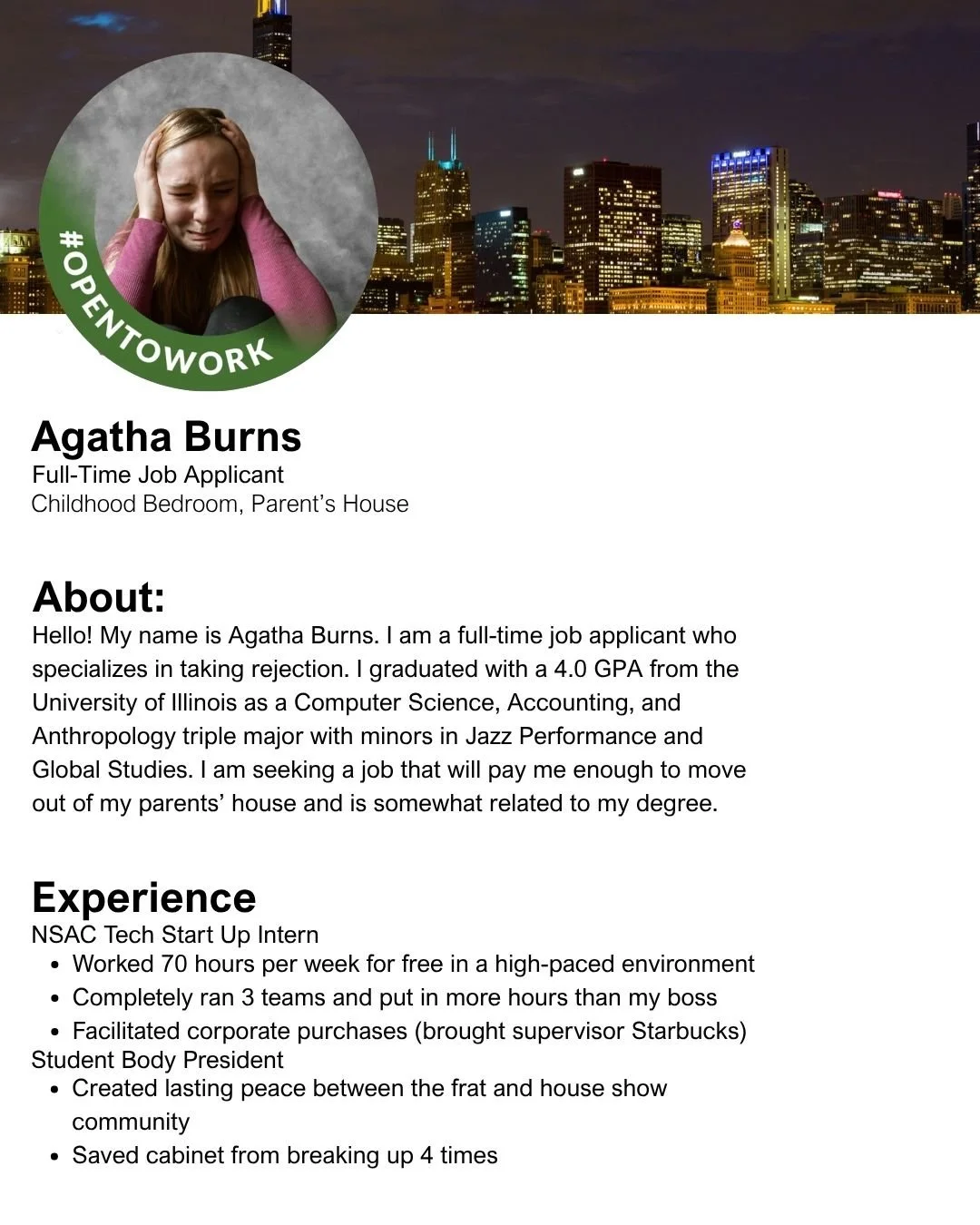
The Insight:
New job seekers are competent. They are valuable. And they are not alone. They just need to be told that sometimes.
The Big Idea:
No one is alone.
Next Steps:
LinkedIn needs to change the way it talks to full-time applicants. It’s not just a job board. It’s a job-searching partner that actually cares about putting people in positions to succeed. That empathy should be at the forefront of its communication strategy.
If I were LinkedIn, I’d leave affirmations where current college kids are. Flyers in career centers, coasters in coffee shops, and self-published LinkedIn posts are great places to reach full-time applicants while they’re actively on the job hunt. I’d also build some support groups on the platform to give job seekers a place to talk about their problems with people who get it. These groups can span across industries and remind people that they are not alone.
Who’s Talking To Them?
The Evidence:
I asked 26 of my dearest friends one simple question: when you’re stressed about the job hunt, what do you need to hear? I then gave them a list of phrases, and let them choose what would be helpful. Here’s what I learned:
The two highest-scoring responses were both positive affirmations. Not advice. Not tacit words of encouragement. Affirmations.
People don’t want to be lectured. They know that they need a strong resume. They don’t need to hear it.
Only 30% of respondents said that they’d want to hear that “everything happens for a reason.” I’ve been told this the most in my personal experiences.